Get the Right Test!
One of the most important tests your doctor could give you! The Magnesium RBC test will tell you if you are low in magnesium.

More than 75% of the American population are deficient in magnesium. According to experts in vitamin and mineral testing, the real figure may be as high as 90%.
--
More than 75% of the American population are deficient in magnesium. According to experts in vitamin and mineral testing, the real figure may be as high as 90%. --
Get the most accurate magnesium test. When you talk to your doctor, ask for a magnesium red blood cell (RBC) test. It is not the common serum magnesium test many doctors order. So ask for the Magnesium RBC test by name!
Why You Need the Right Magnesium Test
You can be low in magnesium and not know it because some of the symptoms are tiredness, poor sleep, muscle cramps and headaches. These symptoms are too nonspecific to warn you that you are low in magnesium.
Since normal magnesium activity is critical inside the cell, the accurate way to tell if you are low is to measure cellular magnesium levels where 99% of your magnesium is stored. The test that measures intracellular magnesium is called a magnesium red blood cell (RBC) test.

"There is no single molecule more critical for sustaining life and promoting health than magnesium." Thomas Levy MD, JD, Author of MAGNESIUM Reversing Disease
--
"There is no single molecule more critical for sustaining life and promoting health than magnesium." Thomas Levy MD, JD, Author of MAGNESIUM Reversing Disease --
Many doctors do not order the Magnesium Red Blood Cell (RBC) test, Share this test information with your health care provider.
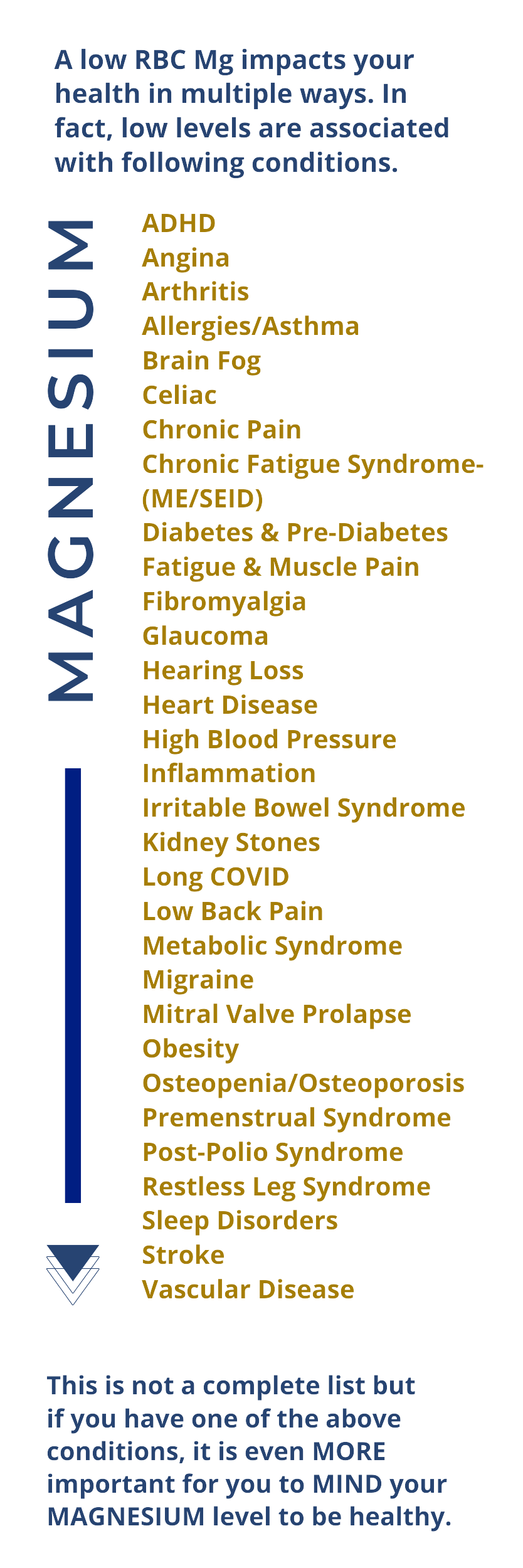
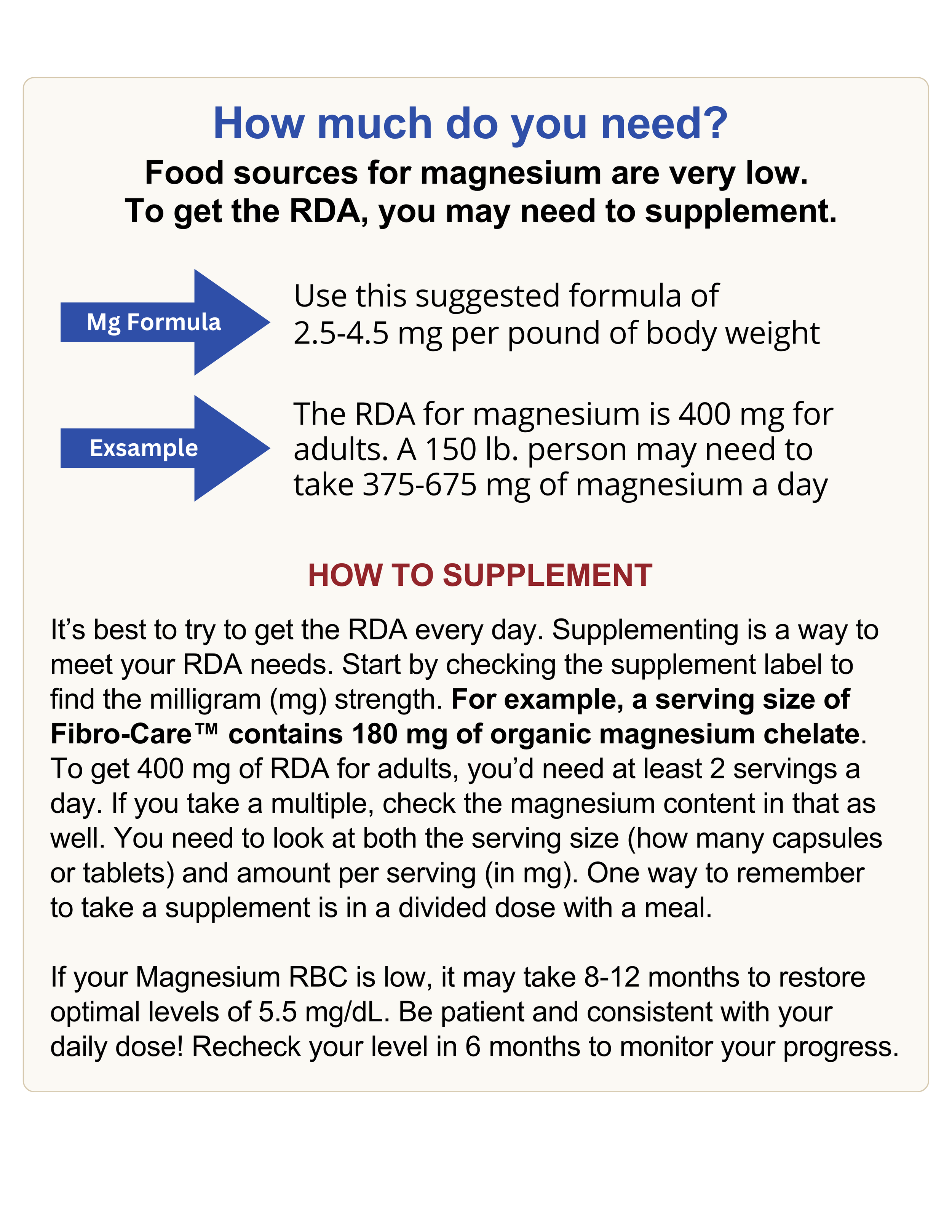
If government statistics are correct, the average person gets about 230 mg of magnesium (Mg) from dietary sources. Since this mineral is responsible for more than 600 enzyme reactions, enzymes that keep your body functioning, what would it mean to your health to be missing magnesium? That’s why a Magnesium RBC Test is helpful to know your magnesium level. Getting the right test is the first step. Getting the right magnesium is the next! Read the Fibro-Care™ Story for more information.
Caution: Individuals with certain health conditions such as kidney disease should consult a health care professional before starting magnesium supplements.